


- Fairness through Difference Awareness: Measuring Desired Group Discrimination in LLMs ACL Main 2025 best paper
- Identities are not Interchangeable: The Problem of Overgeneralization in Fair Machine Learning FAccT 2025
- Measuring Implicit Bias in Explicitly Unbiased Large Language Models PNAS 2025
- Overwriting Pretrained Bias with Finetuning Data ICCV 2023 oral
- Towards Intersectionality in Machine Learning: Including More Identities, Handling Underrepresentation, and Performing Evaluation FAccT 2022
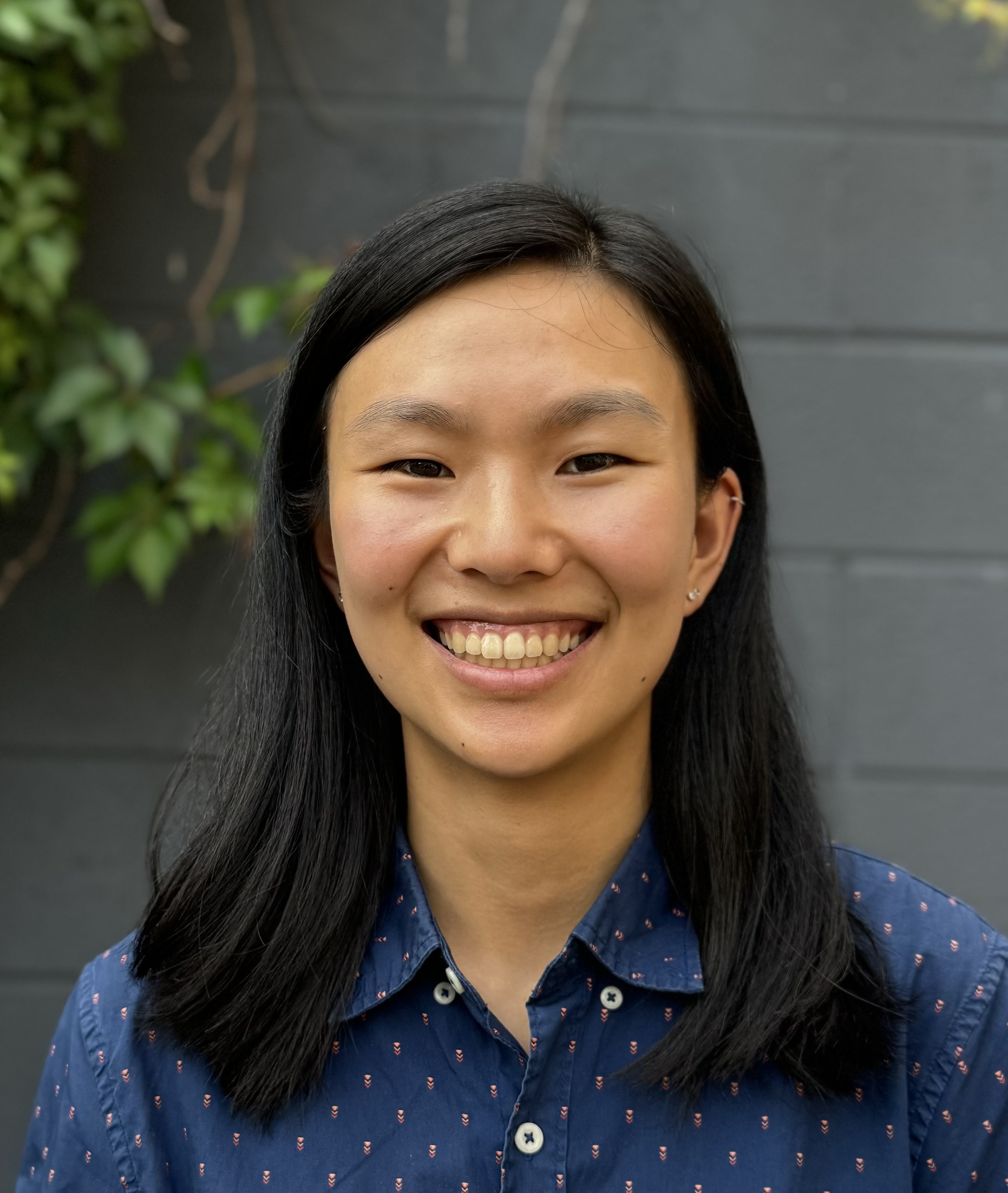
I am an Assistant Professor at Cornell Tech and in the Department of Information Science at Cornell University, as well as a field faculty member in Computer Science and Data Science. I am also currently a Microsoft AI & Society Fellow, Center for Democracy & Technology Non-Resident Fellow, and Schmidt Sciences AI2050 Early Career Fellow.
I am currently recruiting both PhD students and postdocs. If you are an interested PhD student, please apply directly to either the Cornell Information Science or Cornell Computer Science PhD programs and list my name on your application. Read this before reaching out.
My research is on responsible AI. Some themes I am interested in include:
AI fairness (FAccT 2022, ICCV 2023 oral, PNAS 2025, FAccT 2025, ACL 2025 best paper): Technical approaches to fairness often oversimplify social concepts through mathematically convenient but harmful abstractions, e.g., treating intersectionality as simply a problem of multiple groups, operationalizing fairness by treating all groups the same (e.g., racial colorblindness). Instead, we develop approaches that better reflect real-world complexities.
Evaluation (Patterns 2024, ICML Position 2025, Patterns 2025, COLM 2026 oral, NeurIPS E&B 2026): Benchmarks and leaderboards shape the norms and goals of a field, and what we choose to measure sets our priorities. We draw on measurement and validity theory to develop more rigorous approaches to AI evaluation.
- AI Construct Lexis: An Ontology of the Hidden Assumptions in AI Evaluation NeurIPS 2026 Evaluations and Datasets Track
- What AI Benchmarks Actually Measure: Adapting Convergent and Discriminant Validity to Interrogate Fifty-Six AI Benchmarks COLM 2026 oral
- The Inadequacy of Offline LLM Evaluations: A Need to Account for Personalization in Model Behavior Patterns 2025
- Position: Evaluating Generative AI Systems is a Social Science Measurement Challenge ICML Position Track 2025
- Benchmark Suites Instead of Leaderboards for Evaluating AI Fairness Patterns 2024
Societal impacts of AI (Nature MI 2025, FAccT 2026 honorable mention, EMNLP Findings 2026): AI systems are increasingly personalized, meaning the same model may give different people different answers to the same question (even when it’s an objective science one!). This has social consequences and complicates evaluation, since standardized, offline benchmarks may not reflect the responses people receive in practice. More broadly, I am interested in how AI is reshaping our epistemic practices.
- Personalization Double Binds: When User Preferences Meet Group-Based Chatbot Behaviors EMNLP Findings 2026
- Ambiguity Collapse by LLMs: A Taxonomy of Epistemic Risks FAccT 2026 honorable mention
- Large Language Models that Replace Human Participants can Harmfully Misportray and Flatten Identity Groups Nature Machine Intelligence 2025
My work has been covered by outlets like MIT Technology Review, Vice, Washington Post, New Scientist, and Tech Brew.
Previously, I was a postdoc at Stanford University HAI, earned my PhD in Computer Science at Princeton University advised by the wonderful Olga Russakovsky, and received a BS in Electrical Engineering and Computer Science from UC Berkeley. I've received the NSF GRFP, EECS Rising Stars, Siebel Scholarship, Microsoft AI & Society Fellowship, and have interned at Microsoft Research and Arthur AI.
I've put together a few explainers that I hope can be helpful:
- AI Fairness FAQ: target audience = those who are fairness-curious
- AI Fairness Statistics Primer: target audience = those working in AI fairness